Automatic coil processing lines are integrated manufacturing systems designed to transform raw metal coils — supplied from steel mills — into precisely dimensioned strips, blanks, or cut-to-length sheets ready for downstream fabrication. Unlike manual or semi-automatic alternatives, fully automated lines execute each processing stage continuously, with minimal operator intervention, maximising throughput and dimensional consistency.
The core principle across all coil processing line types is the same: a large-diameter coil is unwound, the material is conditioned (straightened, levelled, or de-scaled), processed (slit, blanked, or cut to length), and then rewound or stacked. Every stage must be synchronized — in terms of speed, tension, and strip path geometry — to maintain the material quality that end-users in precision industries demand.
SUMIKURA Co., Ltd., founded in 1947 and headquartered in Hamamatsu, Japan, is one of the world's leading specialized manufacturers of full-service coil process lines. With over 70 years of engineering experience and nearly one thousand installed lines in operation globally, SUMIKURA represents the depth of technical development this equipment category has undergone over decades.
Modern coil processing plants typically operate multiple line types in parallel, each optimized for a different output format. Understanding the distinctions is essential for procurement engineers, service center managers, and OEM buyers specifying new equipment.
Slitting lines cut a wide master coil longitudinally into multiple narrower strips using circular blade sets (slitter heads). The SUMIKURA metal slitting line handles material thicknesses from 0.2 mm to 9.0 mm, produces up to 50 strips per pass, and reaches line speeds of 300 m/min — making it the highest-throughput coil processing line type. Slitting lines are the workhorses of steel service centers, feeding slit coils directly to cold roll forming, tube welding, stamping, and cable tray production downstream.
Cut-to-length lines (CTL) unwind, flatten, and shear coil stock into flat sheet blanks of a specified length. CTL lines are the standard supply source for laser cutting, plasma cutting, and heavy stamping operations. The levelling quality of a CTL line — particularly flatness deviation in µm/m — is a critical specification for high-precision fabrication.
Blanking lines cut coil stock into shapes rather than simple strips or rectangles, typically using progressive or transfer die sets. They are the primary supply line for automotive body panel stamping, where net-shape or near-net-shape blanks eliminate scrap and reduce press cycle times. Blanking line accuracy directly influences the dimensional quality of finished automotive parts.
Oscillated shear lines use a rotating shear head to produce trapezoidal or parallelogram-shaped blanks optimized for tube mill or roll forming applications, minimising material waste compared to straight-cut alternatives. This geometry allows a perfect butt weld when the strip is rolled into a tube.
The technical sophistication of a modern automatic slitting line is concentrated across five primary stations. Each must perform flawlessly at speeds reaching 300 m/min — roughly five metres of material processed every second — while maintaining sub-millimetre tolerances and protecting sensitive surface finishes.
The decoiler supports the master coil on an expanding mandrel, whose hydraulic or mechanical expansion grips the coil's inner diameter securely. The SUMIKURA line accommodates coils up to 35 tons and 2,500 mm wide — the upper capacity range for heavy-duty service center operations. Coil car integration, coil centering, and entry peeler mechanisms are all automated on production-grade lines. Mandrel runout accuracy (measured in microns) directly affects strip edge quality during acceleration phases.
Raw coil stock inherits a natural curl from the winding process. The straightener — or, for high-flatness requirements, a multi-roll precision leveler — applies alternating plastic bending through a series of hardened work rolls, eliminating coil set and edge wave defects before the material enters the slitter head. For demanding applications, SUMIKURA integrates a Six-Hi Leveler, which uses six rolls in a specific geometry to apply localized flattening pressure without damaging the surface — critical for high-strength steels (HSS) and electrical steel grades.
Tension management is arguably the most technically complex aspect of slitting line design. Insufficient tension causes strip weave and poor recoiling geometry. Excessive tension stretches thin material or marks soft-aluminium and zinc-coated surfaces. SUMIKURA equips its slitting lines with three primary tension unit technologies:
The slitter head is the defining functional unit of a slitting line. Circular upper and lower blades — precision-ground from tool steel or carbide — are mounted on arbors and positioned to the required slit widths. The SUMIKURA line supports a double slitter configuration, where two slitter head sets are installed on the line simultaneously. While one head is actively slitting, the second can be pre-set and tooled offline, dramatically reducing changeover downtime when switching to a new width program.
The turnstile concept extends this further: multiple pre-tooled slitter arbor sets are stored on a rotating carousel adjacent to the line. A complete head change — including removing the active head, swivelling the turnstile, and inserting the pre-tooled replacement — can be completed in minutes rather than hours. This capability is central to the economics of a high-mix, high-volume service center operation. Explore the Slitter Exchange System from SUMIKURA for further technical detail on rapid tooling changeover solutions.
At the exit end of the line, individual slit strips must be separated and wound onto individual recoiler arbors — all simultaneously. A separator system (using rubber discs or looping pits) controls inter-strip clearance to prevent edge-to-edge contact and consequent surface damage. The recoiler's torque profile must be managed dynamically across the full coil diameter growth cycle to maintain consistent strip tension from core to OD.
The Edge Cropper trims the coil's leading and trailing edges before processing enters the slitter — eliminating deformed ends that would compromise slit edge quality. The Scrap Chopper then handles the trim waste and edge scrap generated during slitting, chopping continuous scrap ribbons into manageable lengths for collection and recycling.
The following table details the full production envelope of the SUMIKURA Metal Slitting Line as currently specified. This represents the benchmark capability for a heavy-duty, multi-material service center slitting line.
| SUMIKURA Metal Slitting Line — Technical Specifications | |
|---|---|
| Material Range | HSS (High-Strength Steel) / CRS (Cold-Rolled Steel) / HRS (Hot-Rolled Steel) / Stainless Steel / Aluminum |
| Max. Coil Width | 2,500 mm |
| Max. Coil Weight | 35 Tons |
| Max. Strip Count | 50 strips per pass |
| Thickness Range | 0.2 mm – 9.0 mm |
| Line Speed | 0 – 300 m/min (variable, servo-controlled) |
| Tension Units | Felt Plate / Belt Bridle / Roll (customer specified) |
| Slitter Configuration | Double Slitter / Turnstile (rapid changeover) |
| Leveler Option | Six-Hi Leveler (for flatness-critical applications) |
| Scrap Handling | Integrated Scrap Chopper (edge trim + side scrap) |
| Surface Protection | Belt Bridle / Felt Plate / Washing Machine option |
| E-Steel Variant | CRNGO / CRGO Electrical Steel Line (0.1–0.8 mm) |
One of the most demanding technical achievements in modern coil processing is the ability of a single line to handle the full spectrum of material types encountered in a mixed-service-center environment — from ductile aluminum to ultra-high-strength martensitic steel — without tooling changes beyond the slitter blades.
Processing HSS and AHSS (Advanced High-Strength Steel) grades — common in automotive body-in-white and structural applications — places significant demands on blade materials, blade geometry (clearance angle), and machine rigidity. Higher tensile strength generates larger cutting forces, requiring heavier slitter arbors, more powerful drive systems, and carbide or coated blade materials to maintain acceptable blade life. SUMIKURA's heavy-duty slitter head design accommodates these requirements without compromising on width tolerance or edge burr.
Electrical steel slitting is the most technically demanding application within the coil processing sector. Silicon content in CRNGO (non-grain-oriented) and CRGO (grain-oriented) electrical steel makes the material brittle, requiring extremely precise blade clearance management to prevent micro-cracking at the slit edge — which would increase core loss in finished transformers and motors. SUMIKURA offers a dedicated E-Steel Slitting Line with precision clearance control systems optimized for thicknesses from 0.1 to 0.8 mm, including support for self-adhesive bonding varnish (SV-bond) coatings.
The automation trajectory in coil processing has accelerated significantly over the past decade, driven by labor cost pressures, quality consistency demands, and integration requirements from automotive and tier-1 supply chain customers. Key trends shaping next-generation slitting and coil processing line design include:
Manual screw adjustment of slitter blade spacer rings — the traditional setup method — is being replaced by servo-driven automatic positioning systems where the desired strip width program is entered at the HMI (Human-Machine Interface) and all blade positions are set automatically. This reduces setup time from hours to minutes, eliminates positioning errors, and captures width programs digitally for instant recall.
Modern slitting lines operate under PLC (Programmable Logic Controller) architectures that manage motor synchronization, tension regulation, speed ramping, and safety interlocks across all stations simultaneously. Integration with plant-level SCADA (Supervisory Control and Data Acquisition) systems enables real-time production monitoring, yield tracking, and quality data capture — feeding into MES (Manufacturing Execution System) platforms increasingly required by automotive OEM customers.
The Slitter Exchange System and Leveler Cassette Exchange System are key enablers of the lean production philosophy in service centers. By pre-setting tooling offline and exchanging entire pre-built cassettes, rather than adjusting tooling in-line, changeover times between production runs are measured in minutes rather than shifts — a critical competitive differentiator in high-mix service center operations.
As automotive and appliance manufacturers demand tighter cleanliness specifications on incoming strip — measured in particle count and oil residue — the integration of an in-line Washing Machine within the coil processing line is increasingly specified. Alkaline spray washing, brush scrubbing, rinse, and hot-air drying stages can be integrated between the leveler and slitter head without breaking line speed continuity.

Vos spécialistes de la ligne de coupe !
 Usine au Japon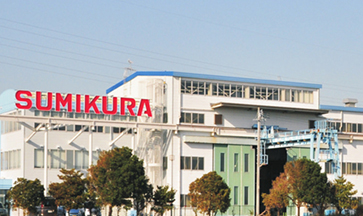
ADRESSE
487-3, Sanshincho, Chuoku, Hamamatsu, Shizuoka, Japon
 Marché local du Japon :+81 53-425-5331
Usine en Chine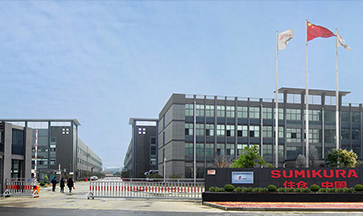
ADRESSE
265 Yixian Road, Deqing, Zhejiang, Chine
Marché d’outre-mer :+86 572-883-2016



