In the modern steel processing industry, the automation metal slitting line machine has evolved from a simple coil-cutting tool into a high-precision, intelligent manufacturing system. As demand intensifies across automotive, electrical, construction, and aerospace sectors, understanding the engineering depth behind today's slitting lines is no longer optional — it is a competitive necessity.
This article offers a comprehensive technical and industry overview of automation metal slitting line machines, drawing on the capabilities documented by SUMIKURA Co., Ltd, a Japan-based cutting line specialist with manufacturing operations in Hamamatsu, Japan and Deqing, Zhejiang, China.
An automation metal slitting line machine is an integrated production system designed to cut wide metal coils — steel, stainless steel, aluminum, or alloy strip — into narrower coils of specified widths. Unlike manual or semi-automatic equipment, a fully automated slitting line combines servo-driven decoilers, precision slitter heads, tension control systems, and programmable recoilers into one coordinated workflow managed by PLC or CNC controllers.
The global steel service center industry depends on this equipment to supply precisely dimensioned strip to downstream manufacturers. Whether feeding automotive stamping presses or electrical motor lamination machines, slitting accuracy is directly tied to end-product quality.
The engineering parameters of a slitting line define its capabilities, costs, and application suitability. Below are the key specifications published for SUMIKURA's standard slitting line, with technical context for each parameter.
The decoiler is the starting point of every slitting line. It holds the master coil on a mandrel — typically hydraulically expandable — and feeds strip material at a controlled, constant rate. Modern decoilers on heavy-duty lines like SUMIKURA's support coils up to 35 tons, requiring robust mandrel design, precise braking control, and coil car integration to minimize loading time and operator risk.
Incoming coil material carries internal stress from rolling and winding. A multi-roll straightener or leveler eliminates coil set, crossbow, and edge wave defects before the strip reaches the slitter head. For high-strength steels (HSS), leveling demands are significantly higher due to material springback — often requiring a Six-Hi Leveler configuration, which applies alternating bending across six rolls to address these challenges more effectively than conventional four-roll designs.
The slitter head is the heart of the machine. It consists of two precision-ground arbor shafts — upper and lower — onto which circular blades and spacers are assembled in alternating configuration. The clearance between upper and lower blades (typically 5–12% of material thickness) must be precisely set to ensure clean, burr-free edges. Improper clearance causes excessive burr, poor edge geometry, or blade wear.
SUMIKURA offers a double slitter configuration, which includes two slitter heads that can be pre-loaded while the other is in production — dramatically reducing tooling changeover time. This is complemented by the Slitter Exchange System, an automated mechanism that swaps entire slitter cassettes quickly and safely.
Maintaining consistent strip tension between the slitter and recoiler is critical for dimensional accuracy and surface protection. Three tension control methods are used, each suited to different material types:
Felt Plate: Gentle friction-based tension for thin or soft materials (thin aluminum, light-gauge cold-rolled steel). Protects surface finish. Belt Bridle: A looped belt system wrapping multiple rolls; provides smooth, adjustable tension without direct contact pressure on the strip surface — ideal for sensitive or coated materials. Access SUMIKURA's dedicated Belt Bridle product page for technical details. Roll Tension Units: High-force tension via driven rolls; used for heavy-gauge or high-strength materials where significant back-tension is needed to prevent strip sagging or strip weaving.
Between the slitter and recoiler, a looping system (pit loop or overhead loop) decouples slitter speed from recoiler speed, absorbing variation and preventing strip breaks. Strip separators — rubber or polyurethane fins positioned between each slit strip — prevent adjacent strips from touching, which would cause surface scratching or edge damage in the loop zone.
Multiple slit strips must be wound simultaneously at consistent tension. The recoiler uses differential winding tension control to handle strips of varying widths on the same mandrel. The turnstile system (dual-position recoiler) allows one mandrel to be unloaded and rebound while the other is in active production, nearly eliminating downtime between coil sequences.
A key differentiator of advanced slitting lines is multi-material capability. SUMIKURA's slitting lines are engineered to handle five primary material categories, each presenting distinct processing challenges:
HSS (High-Strength Steel): Yield strengths above 550 MPa demand higher blade cutting forces, tighter blade clearance control, and more robust tension systems. Springback during leveling must also be compensated. CRS (Cold-Rolled Steel): The most common slitting material — surface-sensitive, requiring smooth handling to avoid marking. Belt bridle or felt plate tension is preferred. HRS (Hot-Rolled Steel): Typically thicker and with scale on the surface; tolerances are wider than CRS. Edge trimming via an Edge Cropper is often required. Stainless Steel: Work-hardening tendencies make slitting stainless steel particularly demanding. Blade selection and coolant management are critical. Aluminum: Soft and prone to surface scratching — requires non-metallic tension contact surfaces and careful separator design.
Modern slitting lines are not simply mechanical systems — they are deeply integrated automation platforms. Key control technologies include:
PLC/SCADA Integration: Programmable Logic Controllers manage all servo drives, tension feedback loops, speed synchronization, and fault diagnostics. A human-machine interface (HMI) provides operators with real-time line status, coil recipe management, and production reporting. Servo-Driven Axes: Decoiler, straightener, slitter, and recoiler drives are individually servo-controlled for precise speed matching and tension maintenance throughout the line. Automatic Width Setting: On premium lines, blade and spacer positioning is motorized and recipe-driven — eliminating manual arbor setup, a major source of downtime. Scrap Management: Edge trim scrap from the slitting process is handled by an integrated Scrap Chopper, which cuts edge trim into compact pieces for convenient disposal or recycling.

Vos spécialistes de la ligne de coupe !
 Usine au Japon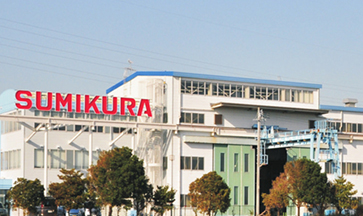
ADRESSE
487-3, Sanshincho, Chuoku, Hamamatsu, Shizuoka, Japon
 Marché local du Japon :+81 53-425-5331
Usine en Chine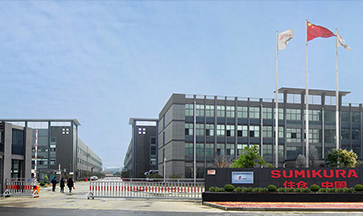
ADRESSE
265 Yixian Road, Deqing, Zhejiang, Chine
Marché d’outre-mer :+86 572-883-2016



