
In the global automotive supply chain, blanking lines occupy a position of fundamental strategic importance. Every pressed body panel — door skins, hoods, roof panels, floor structures, fenders — begins its life as a flat metal blank cut with millimeter-level precision from a continuous coil. The quality, speed, and consistency of this blanking operation directly determines downstream press efficiency, surface quality, and dimensional conformance across millions of vehicles per year. This article explores the engineering depth, technical challenges, and industry significance of the modern blanking lines manufacturer segment, with reference to the solutions developed by SUMIKURA Co., Ltd — a specialist cutting line manufacturer with operations in Japan and China.
A blanking line is an automated production system that converts large steel or aluminum coils into precisely cut flat sheets — called blanks — which serve as the raw input material for automotive stamping presses. The blanking process is distinct from simple shearing or slitting: it produces a finished-perimeter cut in a single press stroke, using a matched punch-and-die toolset that simultaneously severs the blank from the parent material and defines its exact shape.
In the context of automotive manufacturing, blanking lines are critical for two categories of output. Outer body panels — doors, hoods, roofs, fenders, trunk lids — demand Class A surface finish quality, where any scratch, dent, or surface distortion introduced during blanking will propagate through downstream stamping and become visible on the finished vehicle. Inner structural panels — floor pans, cross-members, reinforcement brackets — prioritize dimensional accuracy and flatness over surface finish but must still meet stringent metallurgical requirements.
A single automotive OEM operating at full volume may require 2–5 million blanks per day across all body panel variants. At this scale, a blanking line operating at 65 strokes per minute (SPM) running two shifts per day produces approximately 62,400 blanks per shift — making uptime, precision, and stacking accuracy existential concerns for production planners.
The engineering parameters of a blanking line define its capability envelope — the range of materials, dimensions, and throughput rates it can process while maintaining required quality standards. The following table compares the two principal line configurations offered by SUMIKURA's blanking line range:
| Parameter | Standard Blanking Line | Lilai Blanking Line | Engineering Significance |
|---|---|---|---|
| Material Types | CRS / HRS | CRS / HRS / Aluminum | Aluminum capability essential for lightweight vehicle programs |
| Press Capacity | Max. 800 tons | Max. 800 tons | Sufficient force for thick HRS and large-format blanks without die bounce |
| Max Sheet Size | 5,000 × 2,750 mm | 5,200 × 2,750 mm | Full-width door outers and roof panels for SUVs and commercial vehicles |
| Material Width | 300 – 2,000 mm | 300 – 2,080 mm | Covers both narrow structural strips and full-width coil stock |
| Material Length | 300 – 6,000 mm | 300 – 4,300 mm | Accommodates extended blanks for roof rails and floor pans |
| Thickness Range | 0.2 – 2.5 mm | 0.5 – 3.0 mm | Full automotive steel gauge range from skin panels to structural members |
| Line Speed | 65 SPM | 65 SPM | High throughput; each SPM increment adds ~960 blanks per 8-hour shift |
| Stacking System | Magnetic | Magnetic & Vacuum | Dual system allows processing both ferrous and non-ferrous materials |
Heavy coils — typically 20–30 tonnes for automotive production — are loaded onto a powered uncoiler using a coil car or crane. The mandrel expands to grip the coil bore, and the leading edge is threaded through a peeler guide into the entry section. Proper coil alignment at this stage is critical: a misaligned coil introduces lateral drift that compounds through all downstream processes.
The coil material carries significant internal stress — longitudinal curvature (coil set), lateral curvature (cross bow), and edge waviness — from the coiling process. A precision Six-Hi Leveler engages the strip through a series of alternating small-diameter rolls, bending and overbending the material plastically to equalize internal stress and achieve near-perfect flatness. For high-strength steel (HSS) and advanced high-strength steel (AHSS), leveling parameters must be carefully calibrated to avoid introducing new residual stresses or surface marks.
A belt bridle system maintains constant strip tension and decouples the intermittent motion of the press from the continuous motion of the uncoiler and leveler. This tension isolation is essential for maintaining consistent feed length accuracy at high SPM rates — any tension fluctuation translates directly to blank length variation.
An edge cropper trims the lateral edges of the strip to remove mill edge irregularities — burrs, cracking, and width tolerance variations — before the strip enters the press area. This step is particularly important for outer panel applications where edge condition affects deep-drawing behavior in subsequent stamping operations.
The core operation. The strip feeds to a programmed length under the blanking die, the press descends, and punch and die separate the blank from the strip in a single controlled stroke. Press tonnage must be precisely calibrated to the material's shear strength — insufficient force produces incomplete cuts with torn edges, while excessive force causes die wear acceleration, noise, and vibration. Blanking clearance (the gap between punch and die expressed as a percentage of material thickness) is a critical die design parameter, typically ranging from 5% to 15% depending on material type and blank edge quality requirements.
Finished blanks are conveyed from the press and stacked by either magnetic or vacuum systems depending on material type. Precise stacking alignment is critical for downstream press feeding automation — misaligned stacks cause blank misfeeds, die damage, and production stoppages.
The expansion of automotive blanking line capability to encompass cold rolled steel (CRS), hot rolled steel (HRS), and aluminum on a single line configuration represents a significant engineering challenge. Each material has fundamentally different mechanical behavior in the blanking die.
CRS is the dominant material for automotive outer panels. It offers excellent surface finish, consistent thickness tolerance (typically ±0.03mm for automotive grade), and superior formability in downstream deep-drawing operations. In the blanking die, CRS tends to produce clean shear faces with minimal burr formation when clearance is properly set. The material's work hardening behavior during blanking affects edge ductility in subsequent flanging and hemming operations.
HRS is used for structural inner panels, floor pans, and reinforcement members where surface appearance is secondary to load-bearing capability. HRS arrives with mill scale that must be managed in the blanking process — scale particles can score die surfaces and contaminate blanks. Thickness tolerances are wider than CRS, requiring blanking line feeding systems that accommodate dimensional variation without length error accumulation.
Aluminum blanking imposes the most demanding requirements on the line. Aluminum's lower shear strength allows blanking at reduced press tonnage, but its tendency to gall (cold-weld) against tool steel die surfaces requires specialized die materials, coatings, and lubrication. The vacuum stacker is essential for aluminum since the material is non-ferrous and magnetic systems are ineffective. Surface sensitivity is extreme — aluminum outer panel blanks destined for Class A body panels must be handled with cushioned contact surfaces and controlled conveyor speeds to prevent micro-scratches.
Technical Note: Blanking clearance optimization differs substantially between material types. A typical CRS blanking clearance of 8–10% of material thickness would produce excessive burr and fracture zone depth on aluminum, where 5–7% is more appropriate. Lines designed for multi-material processing incorporate quick-change die systems and programmable press parameter libraries for each material/thickness combination.
The SUMIKURA press system is engineered for the specific demands of high-speed blanking — different from a standard forming press in several key ways. Blanking presses must sustain high snap-through shock loads as the punch breaks through the material. This shock must be absorbed by the press frame and isolated from the die set to prevent premature fatigue. Modern blanking presses incorporate active vibration damping, precision counterbalance systems, and servo-driven slide motion profiles that optimize the punch velocity through the material for each die-material combination.
Contemporary blanking lines are fully automated production systems controlled by programmable logic controllers (PLCs) with centralized HMI supervision. Automatic parameter setting — coil width detection, material thickness measurement, feed length programming, and press tonnage pre-selection — reduces changeover time between production orders from hours to minutes.
Industry 4.0 integration is increasingly demanded by automotive OEM customers. Key capabilities include: real-time production data logging (blanks produced, cycle time, press force per stroke, stacker alignment data); statistical process control (SPC) flagging of out-of-tolerance conditions; remote diagnostic connectivity for predictive maintenance; and integration with MES (Manufacturing Execution Systems) for order management and material traceability. A quick-change leveler cassette exchange system and slitter exchange system further reduce downtime between production runs.
The oscillated tool system represents an advanced capability for producing non-rectangular blank geometries — a growing requirement as vehicle designers optimize blank shapes to reduce material waste (nesting efficiency) and minimize downstream trim operations.
Blanking is a subtractive process — the scrap skeleton remaining after blank separation must be efficiently removed, chopped, and containerized. In a line producing 65 blanks per minute from a 2-meter-wide coil, scrap generation rates can exceed several tonnes per hour. The scrap chopper integrated into the SUMIKURA line design addresses this by continuously chopping the scrap skeleton into manageable fragments that drop into a collection system, maintaining line continuity without operator intervention.
Scrap yield (the percentage of input coil weight converted to finished blanks versus scrap) is a key economic metric for blanking line operators. Optimizing blank nesting patterns — particularly for irregular-profile blanks — can improve material yield by several percentage points, representing significant cost savings at automotive production volumes.
Automotive OEMs — Major vehicle manufacturers including the program installations at Shougang (Ningbo Shougang Blanking Line), Geely (Geely Blanking Line), and DFAC (Dongfeng Automotive Company) referenced in SUMIKURA's project portfolio operate in-house blanking capacity to control quality, reduce logistics cost, and manage just-in-time stamping schedules. Tier-1 Stamping Suppliers provide pressed sub-assemblies to OEMs and require blanking lines capable of producing the full range of panel blanks to customer-specified dimensional tolerances. Metal Service Centers operate blanking lines as a commercial service, supplying pre-cut blanks to multiple customers from shared coil inventory — an increasingly popular model as smaller stamping operations outsource the blanking step.
Blanking lines represent one application within SUMIKURA's broader capability as a specialist cutting line manufacturer. The company's full product and solution range covers complementary processes that together form complete coil-processing and stamping-preparation systems:
Several converging forces are reshaping the technical requirements for blanking line manufacturers in the current market environment.
The automotive industry's relentless pursuit of vehicle weight reduction — driven by fuel economy regulations and electric vehicle range requirements — is accelerating the adoption of aluminum outer panels, high-strength steel structural members, and even carbon fiber composites. Blanking lines must increasingly accommodate this material diversity on shared equipment, requiring advanced control systems and quick-change tooling architectures.
EV platforms frequently feature skateboard-style battery tray structures with large-format aluminum floor pans — components requiring precisely the large sheet dimensions (up to 5,200 × 2,750 mm) and aluminum processing capability offered by advanced blanking lines. As EV production volume scales globally, demand for aluminum-capable blanking line capacity is growing faster than the broader market.
Post-pandemic supply chain disruption has prompted major automotive groups to invest in regional production capacity, reducing dependence on transcontinental blank supply. This trend is driving greenfield investments in blanking line equipment across North America, Europe, and Southeast Asia — creating demand for manufacturers capable of delivering complete turnkey systems with local commissioning and after-sales support.

Vos spécialistes de la ligne de coupe !
 Usine au Japon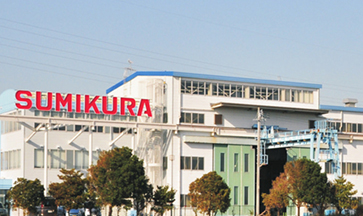
ADRESSE
487-3, Sanshincho, Chuoku, Hamamatsu, Shizuoka, Japon
 Marché local du Japon :+81 53-425-5331
Usine en Chine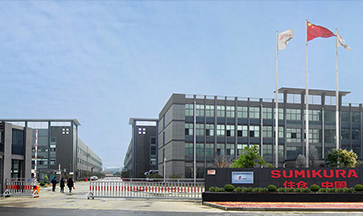
ADRESSE
265 Yixian Road, Deqing, Zhejiang, Chine
Marché d’outre-mer :+86 572-883-2016



