
As metal processors face growing demand for higher productivity, tighter dimensional tolerances, and lower material waste, the cutting section of a coil processing line has become increasingly important. A Japan Precision Rotary Shear System provides a continuous cutting method that can improve production flow without requiring the strip to stop for every cut.
Unlike conventional stop-and-cut equipment, a rotary shear performs cutting while the material continues moving through the line. With synchronized blade rotation, servo control, adjustable blade positioning, and suitable tooling, the system can support high-speed cutting, edge trimming, and sheet dividing while maintaining consistent quality.
For manufacturers evaluating a new coil processing line, the key question is not simply whether rotary shearing is faster. The more important question is how the cutting mechanism affects accuracy, throughput, material utilization, and overall line stability.
Metal coil processing converts coiled material into finished sheets, blanks, strips, or other predetermined shapes for downstream manufacturing. A typical line may include coil loading, uncoiling, leveling, feeding, measuring, shearing, and stacking.
The cutting stage must work together with the upstream feeding and leveling equipment. If the strip is not stable, flat, and correctly positioned before it reaches the shear, even a highly accurate cutting unit cannot consistently deliver the required dimensions.
For this reason, a precision rotary shear should be considered as part of the complete coil processing system rather than as an isolated cutting machine.
Depending on the production requirement, rotary shearing can be used for:
Cut-to-length processing
Edge trimming
Sheet dividing
Continuous sheet cutting
Preparation for downstream forming or stamping
Coil service center processing
SUMIKURA's coil-processing portfolio includes cut-to-length, blanking, oscillated shear, and slitting lines, allowing the shearing technology to be matched with different production requirements.
The fundamental difference between rotary shearing and conventional stop shearing is the relationship between the cutting tool and the moving strip.
A rotary shear uses rotating blades to create the cutting action as the material passes through the shear unit. Instead of waiting for the strip to stop and then making a single stroke, the rotating tooling engages the material during continuous movement.
This approach reduces the mechanical interruption associated with repeated stopping and restarting. The blade design, material selection, clearance, and positioning must nevertheless be matched to the thickness and mechanical properties of the processed sheet.
For demanding applications, blade durability is also important. SUMIKURA specifies high-grade alloy or tool-steel blade construction for its precision rotary shear concept, supporting wear resistance during continuous processing.
Continuous cutting only works when the shear and strip remain properly synchronized.
The cutting cycle must correspond to the actual line speed and programmed cutting length. If synchronization is incorrect, the result can include dimensional deviations, poor cut geometry, excessive mechanical loading, or inconsistent production.
A useful way to understand the process is:
Required cut length + actual line speed → cutting timing → blade engagement
The faster the line operates, the less tolerance there is for errors in timing, positioning, and feedback.
Servo-driven control provides the responsiveness required for synchronized movement. The control system can coordinate blade rotation with material movement and help maintain repeatable cutting positions.
In a modern automated line, servo control should also work with sensors, encoders, PLC logic, and the operator interface. This allows parameters such as cutting length, speed, and trimming settings to be configured according to the production job.
SUMIKURA's product information specifically identifies servo motors and control systems as key elements for maintaining synchronization between blade rotation and line speed.
High-speed operation has little value if sheet dimensions are inconsistent. Rotary shear performance therefore depends on the interaction between mechanical positioning, blade geometry, material behavior, and control accuracy.
The blades must remain correctly aligned with the intended cutting path. Small positioning errors can become more significant when processing long production runs or narrow dimensional tolerances.
Quick-adjust positioning can also reduce setup time when switching between products with different cutting requirements.
Blade gap and overlap are critical parameters in rotary shearing.
The appropriate setting depends on factors such as:
Material thickness
Material hardness
Tensile strength
Blade geometry
Required edge quality
If the gap is too large, the cut may become rough or produce excessive deformation. If it is too small, cutting forces and blade wear can increase.
Therefore, operators should not treat one blade setting as suitable for every material. Setup parameters need to be established according to the actual production specification.
Cutting accuracy also depends on the entire line. The leveler must provide stable material flatness, the feeding system must deliver predictable strip movement, and the measurement system must accurately determine the cutting position.
This is why rotary shear performance is closely connected with the rest of the cut-to-length line.
For example, SUMIKURA's cut-to-length solutions integrate uncoiling, leveling, measuring, shearing, and stacking, with configurations capable of processing materials including HSS, CRS, HRS, stainless steel, and aluminum.
One of the strongest reasons to consider a precision rotary shear is the ability to maintain material movement during cutting.
A conventional guillotine or stop shear generally requires the strip to stop before the cutting stroke. The material then has to accelerate again after the cut.
This repeated cycle can introduce:
Start-stop losses
Strip vibration
Additional acceleration and deceleration
Lower effective production speed
More mechanical cycling
A rotary shear performs the cut while the strip is moving, allowing the line to maintain a more continuous production flow.
Continuous processing can increase the amount of material processed within a given production period.
SUMIKURA's published cut-to-length configurations include rotary-shear lines operating at speeds of up to 80 m/min, depending on the specific configuration, material, thickness, and application. One configuration covers HSS, CRS, and aluminum with 0.4–4.0 mm thickness, 150–800 mm width, and 300–2,000 mm sheet length.
These figures should not be interpreted as a universal operating speed. Actual performance must be determined from the material, dimensions, required accuracy, line configuration, and production conditions.
Fewer interruptions can also simplify production planning. When cutting, leveling, feeding, and stacking are coordinated, operators can reduce unnecessary manual intervention.
For high-volume manufacturers, the productivity benefit is therefore not simply the speed of the shear itself. It is the reduction of non-productive time across the entire processing cycle.
Material utilization is another important consideration when selecting a coil processing system.
If the programmed cutting length is stable and repeatable, manufacturers can reduce over-length and under-length material caused by inaccurate feeding or inconsistent cutting.
This becomes particularly important when processing expensive materials such as aluminum, stainless steel, or specialty coated sheets.
Continuous cutting can reduce losses associated with repeated stopping, restarting, and manual correction.
However, minimizing scrap requires more than accurate shearing. Coil width, nesting strategy, trimming allowance, edge condition, material flatness, and downstream blank dimensions all influence the final utilization rate.
Rotary shear systems can also support edge-trimming applications. Removing damaged, irregular, or unwanted edge material before subsequent processing can improve the usable quality of the strip.
SUMIKURA describes its precision rotary shear system as suitable for edge trimming, cut-to-length processing, and sheet dividing, making it applicable to different stages of coil preparation.
A precision rotary shear must be selected according to the actual material properties rather than simply the material name.
Typical applications include:
| Material | Key Processing Considerations |
|---|---|
| Carbon steel | Thickness, tensile strength, blade clearance |
| High-strength steel | Higher cutting force and blade wear |
| Stainless steel | Strength, work hardening, edge quality |
| Aluminum | Surface protection and clean cutting |
| Copper | Material softness and deformation control |
| Coated sheets | Surface protection and edge quality |
SUMIKURA states that its precision rotary shear system is designed for carbon steel, stainless steel, aluminum, copper, and coated sheets. Its broader cut-to-length systems also cover HSS, CRS, HRS, stainless steel, and aluminum.
For a new project, buyers should provide the manufacturer with material grade, thickness range, coil width, maximum coil weight, target sheet length, required speed, and accuracy requirements before selecting the shear configuration.
There is no universal answer. The appropriate shear depends on the production process.
| Factor | Precision Rotary Shear | Guillotine / Stop Shear |
| Material movement | Continuous | Stops for cutting |
| High-speed production | Strong advantage | More limited |
| Production flow | Continuous | Intermittent |
| Typical application | High-speed coil processing | Applications requiring stop-and-cut operation |
| Cutting method | Rotating blade system | Linear cutting stroke |
| Changeover requirements | Quick adjustment possible | Depends on line design |
| Main advantage | Throughput and continuous operation | Flexibility for suitable stop-cut applications |
For high-volume coil processing where continuous movement is important, rotary shearing can provide a significant productivity advantage.
For thicker materials or applications where stopping the strip is acceptable, a stop or guillotine shear may remain an appropriate solution. SUMIKURA's automatic precision cut-to-length line, for example, offers both stop and rotary shear configurations depending on material and processing requirements.
The correct choice should therefore be based on material thickness, production speed, cutting length, accuracy, line layout, and required output, rather than on cutting technology alone.
When evaluating a Japan Precision Rotary Shear System, buyers should start with production requirements rather than machine specifications alone.
List every material grade that the line will process, including steel, stainless steel, aluminum, copper, or coated products.
The minimum and maximum thickness and working width determine the appropriate shear configuration, blade design, and drive capacity.
A target speed should be established together with the required cutting accuracy and material characteristics. A higher nominal speed is not useful if it compromises cut quality.
The manufacturer needs to know the required sheet lengths and dimensional tolerances. This information affects feeding, measurement, servo synchronization, and shear control.
Ask how blade gap, overlap, and position are adjusted and how quickly operators can change between production jobs.
A rotary shear performs best when integrated correctly with the decoiler, leveler, feeder, measuring system, conveyor, and stacker.
SUMIKURA's larger cut-to-length systems integrate leveling, measuring, shearing, and stacking, with options for automated coil handling and cassette exchange. Its published full-scale configuration can handle material thicknesses from 0.2–9.0 mm, widths up to 2,500 mm, coil weights up to 35 tons, and speeds up to 80 m/min, depending on the selected configuration.
Founded in 1947 and headquartered in Hamamatsu, Shizuoka, Japan, SUMIKURA specializes in coil processing lines and related technologies. Its product range includes cut-to-length lines, blanking lines, oscillated shear lines, slitting lines, and rotary shear solutions.
The company's approach is centered on integrating individual processing technologies into complete production lines rather than treating the shear as a standalone machine. This is particularly important for manufacturers that need consistent coordination between material feeding, leveling, cutting, conveying, and stacking.
For customers evaluating a Japan Precision Rotary Shear System, the key advantage is therefore the combination of continuous cutting technology and complete coil-processing engineering.
A precision rotary shear can improve metal coil processing in three interconnected ways: continuous production, controlled cutting accuracy, and better material utilization.
The technology is especially valuable when manufacturers need high output without sacrificing dimensional consistency. However, the shear itself is only one part of the equation. Blade settings, servo synchronization, material characteristics, leveling quality, feeding accuracy, and downstream handling must all work together.
For manufacturers planning a new cut-to-length or coil processing line, the most effective approach is to define the material range, thickness, width, cutting length, speed, tolerance, and production volume first. The rotary shear can then be engineered around those requirements rather than selected from a generic specification.

Vos spécialistes de la ligne de coupe !
 Usine au Japon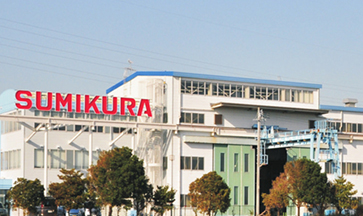
ADRESSE
487-3, Sanshincho, Chuoku, Hamamatsu, Shizuoka, Japon
 Marché local du Japon :+81 53-425-5331
Usine en Chine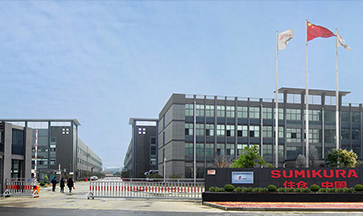
ADRESSE
265 Yixian Road, Deqing, Zhejiang, Chine
Marché d’outre-mer :+86 572-883-2016



