
Modern metal manufacturers are under increasing pressure to produce narrower tolerances, higher throughput, and lower operating costs. Whether processing cold-rolled steel, stainless steel, aluminum, or electrical steel, selecting the right Coil Processing Machinery directly impacts production efficiency, product quality, and long-term profitability.
Today's intelligent coil processing lines are no longer limited to simple slitting operations. They integrate advanced automation, servo control, intelligent tension management, robotic tooling exchange, and digital production management to achieve consistent high-quality output while reducing labor dependency.
For manufacturers investing in new production lines or upgrading existing equipment, understanding the core technologies behind modern coil processing systems is essential.
Coil Processing Machinery refers to integrated production equipment designed to convert master coils into finished products through processes such as slitting, cut-to-length, blanking, recoiling, inspection, and packaging.
A complete coil processing workflow generally includes:
Large steel coils are loaded onto an uncoiler where hydraulic expansion systems securely clamp the coil while maintaining stable rotation throughout production.
Incoming material often contains coil set, crossbow, or residual internal stress. Precision levelers remove these defects to improve flatness before downstream processing.
High-accuracy slitter heads divide the master coil into multiple narrow strips according to customer specifications. Knife clearance, arbor rigidity, and blade precision directly influence:
Throughout the production line, tension systems maintain constant strip stability to prevent:
Finished strips are rewound into coils with uniform tension before automatic banding, labeling, and palletizing for shipment.
Modern manufacturers increasingly integrate inspection systems, robotic handling, and production management software into a single intelligent production line.
Not every slitting line delivers the same performance. When evaluating equipment, buyers should focus on the technologies that directly affect production quality and operating efficiency.
Production speed significantly affects manufacturing capacity.
Modern coil processing lines can operate at speeds reaching 300 m/min, allowing manufacturers to increase throughput without sacrificing cutting precision when supported by stable tension and precision tooling.
High-quality slitting depends on several mechanical factors:
These features help minimize:
High edge quality is particularly critical when processing transformer steel, motor laminations, automotive components, and precision electronic materials.
Stable strip tension is essential for dimensional consistency.
Advanced systems utilize:
Compared with conventional felt-pad systems, modern belt bridle technology offers better surface protection for sensitive materials such as CRGO and CRNGO electrical steel.
Servo-controlled positioning improves production accuracy by automatically adjusting:
Benefits include:
Manual knife replacement often results in long downtime.
Modern automatic slitter exchange systems can automatically:
Robotic tooling exchange significantly reduces changeover time while improving workplace safety.
Automation has become one of the most important competitive advantages in modern steel processing facilities.
Automated material handling minimizes manual operations including:
This reduces operator workload while improving workplace safety.
Intelligent production scheduling shortens:
As a result, overall equipment effectiveness (OEE) increases.
Integrated control systems continuously monitor:
This enables highly repeatable production with minimal dimensional variation.
Predictive maintenance technologies can monitor:
Early fault detection helps prevent unexpected production stoppages while extending equipment life.
Choosing the right coil processing machinery begins with understanding your production requirements.
Different material thicknesses require different machine configurations.
For example:
Wider coils require:
The maximum supported coil width should match both current and future production plans.
Higher production speeds increase output but require:
Manufacturers producing many narrow strips simultaneously should evaluate:
Higher strip counts demand greater machine rigidity and alignment accuracy.
Applications such as transformer cores, EV motors, precision electronics, and high-end stamping require:
Selecting equipment designed specifically for these industries helps reduce downstream defects and improve product performance.
Industry 4.0 is transforming traditional coil processing into fully connected intelligent manufacturing.
Production equipment increasingly exchanges data with enterprise systems, enabling automatic job scheduling, parameter downloading, and production traceability.
Robots are replacing manual operations in:
This improves both efficiency and workplace safety.
Modern coil processing lines now incorporate:
These capabilities help manufacturers optimize productivity while reducing operating costs.
As a specialist in coil processing technology, SUMIKURA has developed a comprehensive portfolio of high-performance production lines for metal processing applications.
Its solutions support materials including:
For demanding electrical steel applications, SUMIKURA's E-Steel slitting lines are designed to process material thicknesses from 0.1–0.5 mm, coil widths up to 1,250 mm, and speeds up to 300 m/min, while maintaining excellent edge quality and surface protection through precision tooling, belt bridle tension control, and automated slitter exchange technology. The company also provides standard slitting lines capable of handling coils up to 2,500 mm wide, 35 tons in weight, and producing up to 50 strips in a single pass.
By combining decades of engineering experience with intelligent automation, SUMIKURA helps manufacturers improve productivity, reduce downtime, and achieve the precision required by today's competitive metal processing industry.

Vos spécialistes de la ligne de coupe !
 Usine au Japon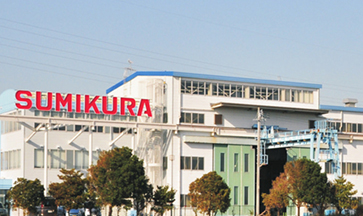
ADRESSE
487-3, Sanshincho, Chuoku, Hamamatsu, Shizuoka, Japon
 Marché local du Japon :+81 53-425-5331
Usine en Chine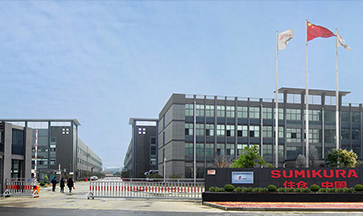
ADRESSE
265 Yixian Road, Deqing, Zhejiang, Chine
Marché d’outre-mer :+86 572-883-2016



