
As high-strength steel and ultra-thin aluminum coils push the limits of conventional leveling equipment, the 6-High Leveler has become the definitive answer to flatness correction at industrial scale. This article explores the engineering behind Six-Hi leveler design, its role in cut-to-length lines, the critical technology choices that separate leading manufacturers, and how SUMIKURA Co., Ltd. has built a global reputation as a precision 6 High Leveler manufacturer since 1947.
In sheet metal processing, flatness is not a cosmetic metric — it is a functional prerequisite. Coiled steel and aluminum arrive at service centers and stamping plants carrying a legacy of residual stress from the cold-rolling process: coil set, crossbow, edge wave, center buckle, and compound camber all represent deformation modes that downstream cutting and forming operations cannot tolerate. The leveler is the machine that corrects all of these conditions before a sheet is cut.
Among all leveler architectures, the Six-Hi (6-High) Leveler represents the most technically sophisticated configuration available for thin-to-medium gauge sheet metal processing. As a leading 6 High Leveler manufacturer, SUMIKURA Co., Ltd. has refined this technology across decades of coil processing line engineering — integrating it into complete cut-to-length lines, blanking lines, and oscillated shear lines that serve automotive, appliance, aerospace, and steel service center industries worldwide.
A conventional four-high (4-Hi) leveler pairs two work rolls with two backup rolls. For many applications — medium-gauge carbon steel in the 1.5 mm to 6 mm range — this architecture is entirely adequate. The problem emerges when material gets thinner, harder, or both simultaneously.
With high-strength steel (HSS) — yield strengths from 500 MPa to 1,500 MPa and beyond — and thin aluminum alloy strip, two forces conspire against flatness correction. First, the required leveling force increases dramatically as yield strength rises. Second, the work rolls themselves must be small in diameter to generate the tight bending radius needed to reach the material's yield point in thin-gauge stock. Small-diameter rolls are inherently prone to deflection under high load. A 4-Hi machine cannot resolve this contradiction: larger backup rolls help with deflection but do not assist with bending radius.
The Six-Hi solution adds a third roll tier — the intermediate roll — between the work rolls and the backup rolls. This intermediate roll distributes load along the work roll's length, effectively suppressing deflection without requiring a larger work roll diameter. The result is a system that can apply high leveling forces through small-diameter work rolls, achieving the deep plastic deformation that tough, high-strength materials require while maintaining dimensional accuracy across the full strip width.
The minimum achievable bending radius in a leveler is approximately 1.5× the work roll radius. For a material to be leveled, it must be bent past its yield point — this requires the bending radius to be small enough relative to the material thickness and yield strength. A 50 mm diameter work roll achieves a minimum bending radius of ~25 mm; a 120 mm roll cannot. Thin HSS strip may require work rolls of 40–70 mm diameter, which would collapse under leveling loads without the support structure that intermediate and backup rolls provide in a 6-Hi configuration.
In a precision Six-Hi Leveler, the diameter ratio between roll tiers is carefully engineered. Work rolls are typically in the range of 40–80 mm diameter for thin-gauge applications. Intermediate rolls are approximately 1.5–2× the work roll diameter, serving their support function without introducing excessive stiffness that would prevent proper strip wrap around the work roll. Backup rolls are the largest, often 200–400 mm in diameter, and are responsible for transferring leveling force from the hydraulic or mechanical actuation system through to the strip.
Roll materials are typically high-chromium tool steel (e.g., D2 / 1.2379 equivalent), hardened to 60–64 HRC on work rolls for wear resistance, with precision-ground surface finishes in the Ra 0.1–0.4 µm range to avoid marking soft aluminum and coated steel surfaces.
One of the most operationally significant innovations in modern Six-Hi Leveler design is the cassette exchange system. Because optimal work roll diameter depends on both material thickness and yield strength, a production line processing multiple material specifications would traditionally require lengthy manual roll changes — a source of significant downtime. SUMIKURA's Cassette Exchange System eliminates this bottleneck by mounting the complete roll assembly — work rolls, intermediate rolls, bearings, and housings — in a self-contained cassette that can be swapped by the line's automated handling system in as little as 5 minutes.
This capability is particularly transformative in hybrid-material lines — systems designed to process both steel and aluminum coils. Aluminum requires larger work roll diameters and different roll surface finishes compared to HSS, and a single cassette-exchange system can accommodate up to three distinct cassette configurations without manual intervention.
Driving a Six-Hi Leveler presents a significant mechanical challenge. Because work rolls are small in diameter, their circumferential velocity relative to the intermediate and backup rolls creates complex torque distribution patterns. Older designs used mechanical torque-limiting couplings; modern systems from leading manufacturers employ multi-motor drive architectures with electronic torque balancing.
In a no-torque-loss configuration, individual servo-driven motors are assigned to each driven roll axis. A supervisory control system monitors real-time torque feedback from each motor and redistributes drive commands to maintain uniform strip tension across the full width. This is particularly critical for high-strength steel processing, where asymmetric torque distribution causes uneven plastic deformation across the strip width and compromises flatness — the very problem the leveler is meant to solve.
The following table presents representative technical parameters for Six-Hi Levelers integrated into SUMIKURA's Cut-to-Length Lines. Actual specifications are configured per customer application.
| Parameter | Light-Gauge Configuration | Heavy/HSS Configuration |
|---|---|---|
| Material Types | CRS, Aluminum, CRNGO/CRGO | HSS, HRS, Stainless Steel |
| Thickness Range | 0.2 – 2.5 mm | 0.8 – 9.0 mm |
| Strip Width | Up to 2,500 mm | Up to 2,500 mm |
| Work Roll Diameter | 40 – 60 mm | 60 – 100 mm |
| Backup Roll Diameter | 180 – 280 mm | 280 – 420 mm |
| Line Speed | 0 – 80 m/min | 0 – 60 m/min |
| Leveling Force | Up to 800 kN | Up to 3,000+ kN |
| Cassette Change Time | ≤ 5 minutes | ≤ 5 minutes |
| Drive System | Multi-motor, electronic torque balance | Multi-motor, electronic torque balance |
| Roll Surface Finish | Ra 0.1 – 0.2 µm (for aluminum) | Ra 0.2 – 0.4 µm |
| Flatness Standard | ≤ 3 I-units (target) | ≤ 5 I-units (target) |
| Material Yield Strength | Up to 600 MPa | Up to 1,500 MPa |
| Cassette Variants | Up to 3 per line | Up to 3 per line |
| Integration | CTL lines, Blanking lines | Oscillated shear lines |
Flatness in sheet metal is quantified using the I-unit (also expressed as "units of flatness" or "steepness index"). One I-unit equals a relative length difference of 10⁻⁵ — that is, a length difference of 0.01 mm per meter of strip. Industrial flatness targets for automotive blanks typically require under 5 I-units; precision stamping applications may demand 3 I-units or less. For reference, a visible buckle in a 1-meter-wide strip corresponds roughly to 20–40 I-units.
The leveling process corrects flatness by inducing reverse plastic bending: the strip is fed through a series of staggered rolls that alternately bend it above and below the neutral axis, progressively reducing the residual stress gradient through the strip's cross-section. In a Six-Hi configuration, the small work roll diameter enables a tight bending radius — critical for generating sufficient plastic strain to overcome the high yield strength of HSS. The intermediate and backup rolls ensure this force is applied uniformly across the full strip width without roll deflection compromising the flatness outcome.
A Six-Hi Leveler does not operate in isolation — its performance is fundamentally shaped by the machinery upstream and downstream of it. In a complete Cut-to-Length Line, the leveler occupies a central position in the process sequence:
Material flow begins at the coil car and uncoiler, which supports coils up to 35 tons and pays out strip at a controlled rate. A belt bridle maintains back-tension on the strip between uncoiler and leveler entry, preventing coil set from reintroducing flatness defects. An edge cropper removes damaged or wavy strip edges before the leveler to protect roll surfaces. The leveler corrects flatness at line speed, feeding continuous flat strip to the shear section, where either a stop-and-cut or rotary flying shear cuts to the programmed length. Cut sheets are then transferred to a vacuum stacker or magnetic stacker for package formation.
Coil Car & Uncoiler → Belt Bridle → Edge Cropper → Six-Hi Leveler → Flying Shear / Rotary Shear → Vacuum / Magnetic Stacker → Offline Packaging
At SUMIKURA, all components in this sequence are engineered and integrated as a system. The Cassette Exchange System and Slitter Exchange System are designed for automatic changeover coordinated by the line's central control system, reducing downtime to the absolute minimum across multi-specification production schedules.
The choice of shear technology downstream affects leveler operation directly. With a stop-shear (guillotine) system, the line stops momentarily at each cut — this cyclic start-stop creates acceleration and deceleration loads on the leveler's roll gap servo, demanding fast response from the hydraulic or servo-electric actuation system to maintain consistent entry tension. With a flying shear or rotary shear, the strip moves continuously at up to 80 m/min, and the leveler operates under steady-state conditions — generally producing more consistent flatness results. SUMIKURA's CTL lines support material thicknesses of 0.2 to 9.0 mm with both shear technologies across strip widths up to 2,500 mm.
The accelerating adoption of advanced high-strength steels (AHSS) in automotive body-in-white construction represents the defining technical challenge for Six-Hi Leveler manufacturers in the current decade. Modern vehicle programs specify dual-phase (DP) steels at 600–980 MPa, press-hardened steels (PHS) at up to 1,500 MPa, and complex-phase steels whose springback characteristics after forming exceed anything a 4-Hi leveler can adequately control.
HSS materials exhibit high springback — the tendency to partially recover their shape after plastic deformation — in proportion to their yield-to-tensile strength ratio. A Six-Hi Leveler addresses springback not by applying more gross force, but by applying bending force more precisely through the smaller work roll diameter, ensuring that sufficient depth of plastic deformation is reached even in the hardest grain structures. The electronic torque balancing system further ensures that this deformation is applied symmetrically, avoiding the edge-to-center flatness gradient that characterizes poorly controlled HSS leveling.
"For high-strength steel, the question is not whether you can flatten it — it's whether you can do so without introducing new residual stresses. That is what separates a well-engineered Six-Hi system from a four-high pressed into service beyond its design envelope."
— SUMIKURA Engineering Team, Technical Brief on HSS Coil ProcessingThe output of a Six-Hi Leveler in a cut-to-length line serves demanding applications across multiple industries. In automotive manufacturing — clients of SUMIKURA include Toyota, Honda, Geely Volvo, SAIC, and Tesla — flat, stress-free blanks are essential for consistent stamping die performance: even minor flatness defects translate directly into dimensional variation in drawn body panels. In electrical steel processing (CRNGO/CRGO), flatness is critical for motor lamination stacking, where stack height uniformity directly affects motor efficiency. SUMIKURA specializes in precision, high-speed slitting lines for electrical steel at thicknesses as thin as 0.1 mm.
Global steel service center customers — including ArcelorMittal, JSW, Nippon Steel, Baowu Group, Shougang Group, KOBELCO, PTTX, and CHINALCO — rely on high-throughput leveling to deliver coil-to-sheet conversion at the quality and volume their own customers require. The appliance industry and construction sector (roofing panels, structural cladding) represent additional high-volume markets where the combination of flatness, surface quality, and production throughput achieved by Six-Hi systems justifies their capital cost.

Vos spécialistes de la ligne de coupe !
 Usine au Japon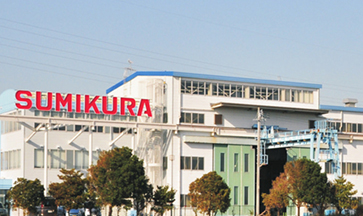
ADRESSE
487-3, Sanshincho, Chuoku, Hamamatsu, Shizuoka, Japon
 Marché local du Japon :+81 53-425-5331
Usine en Chine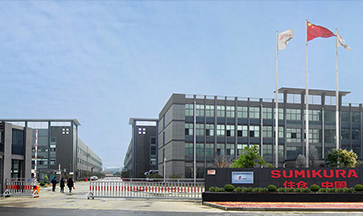
ADRESSE
265 Yixian Road, Deqing, Zhejiang, Chine
Marché d’outre-mer :+86 572-883-2016



