
In modern coil-to-sheet metal processing, Automation CTL Lines represent one of the most mission-critical investments a manufacturer, service center, or processor can make. These fully integrated systems handle every stage of transformation — from raw coil uncoiling through precision leveling, high-speed cutting, and automated stacking — all within a single, fully automated production environment. This article explores the engineering depth, technical architecture, application landscape, and industry considerations that define today's most advanced CTL line solutions.
A Cut-To-Length (CTL) Line is an industrial sheet metal processing system that uncoils a metal strip from a coil, flattens it through a precision leveler, cuts it to a specified length, and stacks the resulting sheets into ordered packages. The term "automation CTL line" specifically refers to systems where all major functions — including leveler cassette exchange, knife positioning, stacking configuration, and packaging — are executed without manual intervention, driven instead by a PLC-based or IT-integrated control architecture.
The word "automation" is doing significant engineering work here. In earlier generations of CTL equipment, operators manually adjusted roll gaps, swapped leveling cassettes by hand (a process that could take 30–60 minutes), and managed stack evacuation manually. In modern automated lines from specialists like SUMIKURA Co., Ltd, a full cassette exchange is completed in under 5 minutes, and setup parameters are loaded automatically from higher-level production IT systems — eliminating human error while dramatically increasing throughput.
CTL lines are distinguished from Slitting Lines (which cut material longitudinally into narrower strips) and Blanking Lines (which stamp or press blanks from strip). The CTL process is transverse — cutting perpendicular to the material flow to produce flat sheet panels of defined dimensions.
SUMIKURA offers customized CTL lines tailored to specific material and production requirements. The two primary configurations available through their Cut-To-Length Lines product page represent the core capability range:
| CTL Line — Heavy-Gauge Configuration (Model 1) | |
|---|---|
| Compatible Materials | HSS / CRS / HRS / Stainless Steel / Aluminum |
| Maximum Sheet Width | 2,500 mm |
| Maximum Sheet Length | 12,000 mm |
| Maximum Coil Weight | 35 Tons |
| Thickness Range | 0.2 – 9.0 mm |
| Line Speed | 0 – 80 m/min |
| Shear Type | Stop / Rotary |
| CTL Line — Narrow-Width / Light-Gauge Configuration (Model 2) | |
|---|---|
| Compatible Materials | HSS / CRS / Aluminum |
| Sheet Width Range | 150 – 800 mm |
| Sheet Length Range | 300 – 2,000 mm |
| Maximum Coil Weight | 15 Tons |
| Thickness Range | 0.4 – 4.0 mm |
| Line Speed | 0 – 80 m/min |
| Shear Type | Rotary |
The contrast between these two models illustrates how CTL lines are engineered for fundamentally different production profiles. The heavy-gauge line supports widths up to 2,500 mm and coils up to 35 tons — a configuration suited to automotive body panel plants and large service centers. The narrow-width model, with its 150–800 mm width range and rotary-only shear, is optimized for appliance component producers and precision sheet processors.
The uncoiler is the entry point of every CTL line. In automated configurations, a motorized coil car transfers the coil from storage to the uncoiler mandrel without overhead crane dependency. Hydraulic expansion of the mandrel locks the coil inner diameter, while a powered peeler assists in threading the strip leading edge into the feed path. Coil weights of 35 tons demand uncoilers with reinforced bearing housings and controlled deceleration to prevent strip whip during tail-end processing.
Between the uncoiler and the leveler, a Belt Bridle system maintains consistent strip tension. This is critical because variations in back-tension directly affect the leveler's ability to plasticize and flatten internal stresses. Belt bridles use driven rubber-belted rollers that grip the strip from both sides, decoupling uncoiler speed fluctuations from the downstream process — a common failure mode in simpler designs that lack this buffering stage.
The leveler is the technical heart of a CTL line. Its job is to permanently remove the coil set — the residual curvature a strip retains after being wound and unwound. This is achieved by bending the strip repeatedly around small-diameter work rolls, alternately above and below the neutral axis, until plastic deformation distributes stresses uniformly through the material thickness.
Modern lines use a cassette-based leveler design, where the entire roll assembly is housed in a removable cassette. The Cassette Exchange System by SUMIKURA allows operators to swap different roll diameter cassettes automatically in just 5 minutes — a massive productivity advantage when switching between thin-gauge aluminum and thick high-strength steel within the same production shift. Hybrid lines can accommodate up to three distinct cassette configurations.
The cutting station is where CTL lines differentiate most clearly at the technical level. Two primary shear technologies dominate the market — each suited to specific production requirements:
A flying shear operates while the strip continues moving at line speed. The shear head accelerates to match strip velocity, executes the cut, and returns to the start position — all without stopping the material flow. This eliminates the stop-and-cut cycle that limits throughput in older designs and is suitable for material thicknesses from 0.2 mm to 9.0 mm. Flying shears achieve the highest productive output per shift, making them the preferred choice for high-volume service centers and automotive tier-1 suppliers.
A rotary shear uses continuously rotating circular blades to cut the strip. The blades' angular velocity is synchronized with strip feed speed to produce a clean transverse cut. Rotary shears excel in lighter-gauge applications (0.4–4.0 mm in SUMIKURA's narrow-width CTL line) and are particularly valued for their ability to produce burr-free cut edges on aluminum and stainless steel — materials sensitive to edge quality for downstream forming operations.
For advanced applications requiring non-orthogonal cuts — parallelogram or trapezoid blanks used in tailor-welded blank assemblies or complex automotive stampings — tilting eccentric rotary shears are employed. This patented cutting technology, integrated into top-tier CTL lines, allows the shear axis to tilt relative to the strip direction during cutting, producing off-angle cuts at full line speed. This capability fundamentally changes what is achievable in coil-to-blank processing without requiring a dedicated blanking line.
After cutting, sheets must be transported from the shear discharge point and deposited into an aligned, stable stack — at speeds that can reach 80 m/min of strip throughput. Two competing technologies handle this challenge, and the choice between them carries significant technical consequences:
The Magnetic Stacker uses electromagnets to lift and transport ferrous sheets. Its advantages are speed and simplicity — electromagnets can be rapidly energized and de-energized, and they require no mechanical gripping contact with the sheet surface. For high-speed steel processing, magnetic stackers are typically the preferred choice. Their limitation is material compatibility: they cannot handle non-ferrous materials (aluminum, copper, brass) or thick non-magnetic stainless steel grades.
The Vacuum Stacker uses suction cup arrays to grip sheets regardless of magnetic properties. This makes it universally applicable — including aluminum, stainless steel, and pre-coated or painted surfaces where electromagnetic handling could cause surface defects. Vacuum systems require careful management of suction force relative to sheet weight and surface porosity, particularly for perforated or textured materials.
A key productivity innovation in modern CTL lines is multi-station stacking, where two or more stacking positions operate within the same stacker frame. While one station is actively receiving sheets, the completed stack on the adjacent station can be evacuated (palletized, bound, wrapped) without halting the cutting line. This eliminates the traditional stop-and-wait cycle at stack changeover — one of the most significant sources of lost production time in older line designs.

Vos spécialistes de la ligne de coupe !
 Usine au Japon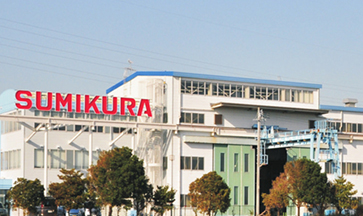
ADRESSE
487-3, Sanshincho, Chuoku, Hamamatsu, Shizuoka, Japon
 Marché local du Japon :+81 53-425-5331
Usine en Chine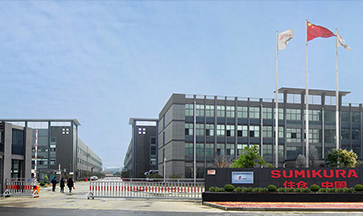
ADRESSE
265 Yixian Road, Deqing, Zhejiang, Chine
Marché d’outre-mer :+86 572-883-2016



