
If your line stops every time a sheet is cut, you are paying for idle time on every coil. A precision rotary shear system cuts while the strip keeps moving. This guide explains how it works, what drives accuracy, and how to choose one for your cut-to-length line.
Metal coil processing turns wide rolls of steel, stainless steel or aluminum into flat sheets or blanks. The cutting method decides how many sheets you can make per hour, and how consistent each one is. Because customers now demand higher volume, tighter tolerance and lower scrap, many plants are moving from stop-and-cut to continuous cutting.
In a conventional stop-and-cut design, the strip is fed to a set length, the line stops, the shear cuts, and the strip starts again. Every cycle includes acceleration, deceleration and a short settling time. At low speed this is acceptable. At high speed, the stop time becomes the bottleneck.
Stopping also affects the material. Repeated start-stop motion can cause strip slip on feed rolls, loop-pit variation and length drift. Continuous cutting removes the stop from the cycle: the shear moves with the strip, makes the cut and returns, while the strip keeps its speed. SUMIKURA’s oscillated shear lines follow this same logic of cutting without halting the strip.
Large batches need a line that holds the same speed for hours. That is the core reason buyers search for high-speed metal cutting and automatic coil processing lines.
A rotary shear uses blades mounted on rotating drums. Instead of a blade that moves straight up and down, the knives travel in a circular path and meet the strip at the moment of the cut.
Synchronization is what makes a rotary shear "precision." A measuring encoder tracks the actual strip speed and position. The servo drive controlling the drums uses that signal to adjust blade speed so it matches the strip at the cut point. Between cuts, the drums accelerate or slow down so that the next cut lands exactly at the programmed length.
When blade speed and strip speed are not matched, the knife either drags the strip or lets it push ahead. The result is stretching, edge deformation, burr changes or length error. A closed-loop servo system corrects these errors in real time, so the strip is cut without tension spikes.
Removing the stop from each cycle raises output per hour and allows the line to run at full speed with no deceleration losses. For large coil volumes, even a small gain per cut becomes a meaningful gain per shift.
Sheet length is determined by electronic timing and not by mechanical stops, so every sheet repeats the same length. Stable servo motion reduces dimensional deviation, which lowers rejected parts and downstream rework. Tolerance expectations are commonly framed by product standards such as ISO 9445 and EN 10131 (see references), so buyers should state their target tolerance clearly.
A strip that keeps moving avoids repeated loop-pit swings and feed-roll slip. Constant output also suits automated handling: sheets arrive at predictable intervals, which helps a vacuum stacker or magnetic stacker place them cleanly. Downstream press feeding also benefits from steady supply.
| Factor | Why it matters |
|---|---|
| Material thickness and width | Thicker, harder and wider strip needs higher shear force, a stiffer frame and larger drums. Strength grade matters as much as thickness. |
| Blade design and clearance | Knife material, edge geometry and clearance set burr height, edge quality and blade life. Clearance usually needs adjustment for each thickness range. |
| Servo control and synchronization | Servo response, encoder resolution and control algorithm determine how closely the knife follows strip speed and how accurate the length is. |
| Line speed | Higher speed shortens the time to correct errors and increases vibration. The shear and drive must be sized for the top speed, not the average. |
| Equipment configuration | Uncoiler, leveling, feeding and stacking all affect results. A shear cannot cut flat sheets from a strip that is not flat. |
For flatness, a six-hi leveler prepares the strip before it reaches the shear. For cleaner coil edges and tidy scrap, an edge cropper and a scrap chopper can be added to the line.
Practical tip: when you request a quotation, give your thickest and thinnest material, strongest grade, widest strip, shortest cut length and highest target line speed. Shear selection depends on these extremes.
Automotive plants use cut sheets and blanks for body panels and structural parts. Flat, dimensionally repeatable blanks improve press stability, and for shaped blanks a blanking line is often the next step.
Refrigerator, washer and other appliance housings use coated or painted sheet. Clean cuts and gentle handling help protect the surface, which matters when the part is visible to consumers.
Service centers and mills process steel and aluminum coils into fixed-length sheets in large volumes. When the same coil must also be divided by width first, a slitting line can work alongside a cut-to-length line. Aluminum needs extra care with surface marking and blade setup.
For overseas buyers, a clear specification and a supplier who can support it after delivery are equally important. Check the following:
SUMIKURA describes itself as a cutting line specialist, with factories in Hamamatsu, Japan and Deqing, China. You can read more on the About Us page, browse all coil processing lines, or follow more articles in Industry News.
Planning a continuous cutting line? Send your material, thickness, width, length and speed requirements, and the SUMIKURA team can help you review the right configuration.

Vos spécialistes de la ligne de coupe !
 Usine au Japon

ADRESSE
487-3, Sanshincho, Chuoku, Hamamatsu, Shizuoka, Japon
 Marché local du Japon :+81 53-425-5331
Usine en Chine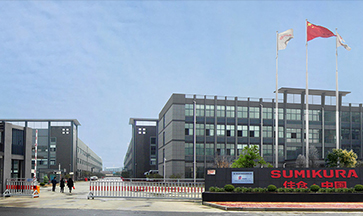
ADRESSE
265 Yixian Road, Deqing, Zhejiang, Chine
Marché d’outre-mer :+86 572-883-2016



