
As manufacturers demand more accurate dimensions, consistent material quality, and higher production efficiency, metal coil cutting machines have become essential equipment for modern steel service centers and metal fabrication plants. However, not every coil cutting machine produces the same type of finished material. Metal coil slitting and cut-to-length processing serve different production requirements, and selecting the right line depends on the material, required dimensions, downstream processes, and expected output.
SUMIKURA Co., Ltd. specializes in metal coil processing lines, including cut-to-length lines, slitting lines, blanking lines, and oscillated shear lines. Founded in 1947 and headquartered in Hamamatsu, Japan, the company provides coil-processing equipment designed for industrial production environments. Understanding the differences between these systems helps manufacturers choose a suitable solution for their specific metal processing applications.
Metal coil cutting machines convert large coils of steel or non-ferrous metals into usable strips, sheets, or blanks. Instead of feeding individual plates into a cutting machine, manufacturers process continuous coil material through a series of integrated operations. Depending on the equipment configuration, these operations may include uncoiling, guiding, leveling, measuring, shearing, slitting, recoiling, and stacking.
The main advantage of coil processing is the integration of multiple operations into a continuous production workflow. Properly configured lines can reduce manual handling, improve dimensional consistency, and support more predictable material flow. However, cutting accuracy depends on more than the cutting mechanism alone. Coil condition, material thickness, tension, leveling performance, feeding accuracy, tooling condition, and control-system synchronization can all influence the final result.
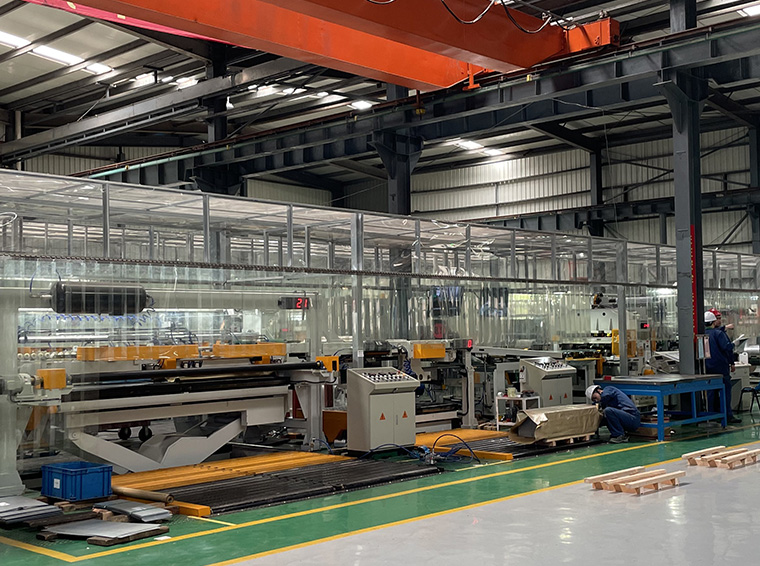
Metal coil slitting and cut-to-length processing differ mainly in cutting direction and finished product format. A slitting line cuts a wide coil longitudinally into multiple narrow strips, which are then rewound into separate coils. A cut-to-length line cuts across the strip width to produce flat sheets with predetermined lengths. Both processes support efficient coil utilization, but they serve different downstream manufacturing needs.
Slitting is suitable for manufacturers that require narrow strips for tube production, roll forming, transformer components, and continuous stamping. Cut-to-length processing is more appropriate when production requires flat sheets for automotive parts, electrical cabinets, appliances, construction panels, or general sheet metal fabrication. When selecting metal coil cutting machines, buyers should therefore consider whether their production process requires narrow coils or ready-to-use sheets, rather than comparing equipment based on line speed alone.
Leveling is one of the most important stages in cut-to-length processing. Metal coils retain a certain degree of curvature from winding, and some materials may also exhibit edge waves, center buckles, or residual stress. If these conditions are not adequately controlled, the resulting sheets may be difficult to stack, position, or process accurately in subsequent stamping and forming operations.
A precision leveler uses a series of rollers to apply controlled bending to the material, helping reduce coil set and improve flatness. The appropriate roller configuration and adjustment depend on material thickness, yield strength, incoming coil condition, and the required finished-sheet quality. For high-strength steel, leveling performance is particularly important because the material's mechanical properties can make deformation control more demanding.
SUMIKURA's cut-to-length equipment portfolio includes six-high leveling systems and alternative leveling configurations for different processing requirements. Its main CTL line page also describes interchangeable leveling cassettes, allowing equipment configurations to be matched to different material types and thicknesses. Automatic cassette exchange can help reduce changeover time when a production line processes multiple material specifications.
The choice of shear affects production rhythm, cutting accuracy, and the types of material a line can process efficiently. A stop shear cuts the material after the feed has stopped or reached the required position. This approach can be suitable for applications where controlled positioning and the specified cutting conditions take priority over uninterrupted material movement.
A rotary shear, by contrast, uses rotating blades to cut material during continuous or synchronized movement. It can support higher-throughput production by reducing the need to stop and restart the strip for every cut. However, the actual performance depends on blade design, synchronization, material properties, sheet length, and line configuration. Neither method is universally superior for every application.
SUMIKURA lists both stop-shear and rotary-shear options for its broader cut-to-length line range. The published specifications include a configuration handling material thicknesses from 0.2 to 9.0 mm, widths up to 2,500 mm, and sheet lengths up to 12,000 mm, with line speeds of 0–80 m/min. A separate configuration is specified for widths of 150–800 mm, lengths of 300–2,000 mm, thicknesses of 0.4–4.0 mm, and coil weights up to 15 tons. These are different equipment configurations, not necessarily the operating range of one machine. Buyers should confirm the applicable specifications against their material and production requirements.
For manufacturers, productivity is not simply the maximum speed displayed in a machine specification. A useful evaluation considers cutting accuracy, setup time, material changeovers, stacking performance, downtime, and the proportion of finished sheets that meet quality requirements. A line that operates quickly but produces inconsistent lengths or poorly aligned stacks may create additional inspection, handling, and rework costs.
Cutting accuracy depends on the coordination of feeding, length measurement, shear timing, and material movement. For example, variations in feed synchronization can lead to inconsistent sheet lengths, while inadequate leveling may cause sheets to spring back or sit unevenly after cutting. Regular blade inspection, appropriate machine settings, and consistent incoming material conditions are also important for maintaining stable output.
Automation can improve repeatability by storing production parameters and coordinating the line's main functions. SUMIKURA describes automated setup based on production data, multiple stacking stations, and automatic equipment-change systems as features available within its CTL solutions. These functions can reduce manual adjustments and help maintain production continuity, although the actual benefit depends on the selected configuration and factory workflow.
Cutting is only one part of a complete metal coil processing operation. Once sheets leave the shear, they must be aligned, collected, and transferred without introducing scratches, dents, or edge damage. This is especially important for materials used in visible automotive panels, appliance housings, and other applications with strict surface-quality requirements.
Magnetic stackers are suitable for compatible ferrous materials, while vacuum-based systems can handle appropriate sheet materials without relying on magnetic attraction. The correct choice depends on material type, sheet dimensions, surface finish, thickness, and the required handling speed. Multiple stacking stations can also allow completed stacks to be removed while production continues at another station, provided the line is designed for that workflow.
SUMIKURA's CTL line page identifies both magnetic and vacuum stacking options, alongside offline packaging choices that may include weighing, strapping, and wrapping. Integrating these operations into the production plan can reduce manual handling and improve the consistency of finished sheet packages.
The right machine depends on the final product and the manufacturing process it must support. If the primary requirement is to divide a master coil into multiple narrow coils, a slitting line is generally the appropriate choice. If the requirement is to produce flat sheets at specified lengths, a cut-to-length line is more suitable. For automotive stamping applications requiring component-specific blanks, a dedicated blanking line may be worth evaluating as well.
Before requesting a quotation, manufacturers should define the material grade, thickness range, coil width, maximum coil weight, finished-sheet dimensions, length tolerance, flatness requirements, target production rate, and stacking method. It is also useful to identify the most demanding material in the planned production mix, rather than selecting a line solely around the most frequently processed material. This helps ensure that the equipment can accommodate realistic production conditions without unnecessary oversizing.
SUMIKURA offers several types of coil processing lines for different output requirements, including slitting, cut-to-length, blanking, and oscillated shear systems. Its engineering approach allows equipment selection to be based on material characteristics, cutting requirements, automation needs, and the intended production workflow.
Some coil-processing facilities use separate slitting and cut-to-length lines to produce different product formats from master coils. Although both systems handle coil material, their cutting mechanisms and output-handling arrangements are different. Whether one integrated solution is feasible depends on the required product dimensions, process sequence, and equipment design.
Depending on the configuration, cut-to-length lines can process high-strength steel, cold-rolled steel, hot-rolled steel, stainless steel, and aluminum. Material thickness, strength, surface sensitivity, and required flatness must be considered when selecting the leveler, shear, and handling system. The maximum published range should not be assumed to apply to every material at the same time.
Accurate length measurement, optimized cutting plans, stable feeding, appropriate setup parameters, and effective changeover management can all help reduce avoidable waste. For slitting operations, knife arrangement and edge-trim requirements also affect material yield. For cut-to-length production, coordinating sheet dimensions with downstream part layouts helps manufacturers make better use of the available coil width and length.
Buyers should provide material specifications, minimum and maximum thicknesses, coil dimensions and weight, required sheet sizes, length and flatness tolerances, target line speed, production volume, and preferred automation level. Sample drawings or representative material specifications can help equipment engineers assess the application more accurately.

Vos spécialistes de la ligne de coupe !
 Usine au Japon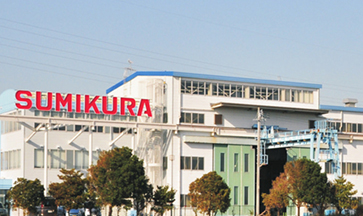
ADRESSE
487-3, Sanshincho, Chuoku, Hamamatsu, Shizuoka, Japon
 Marché local du Japon :+81 53-425-5331
Usine en Chine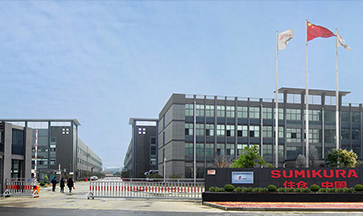
ADRESSE
265 Yixian Road, Deqing, Zhejiang, Chine
Marché d’outre-mer :+86 572-883-2016



